


Hello, SLART here, and welcome to Weekly Art Practice, AKA Projekt Rattloch.
I’ve done some painting this week, which is the thing, as I always say. It’s the thing. Everything else is noise.
I feel like it’s not done as often as I should. I get caught between wanting to leave my job so I can paint full time.
Then there’s a transition between how can I finance that. That’s been going on for the past three years, maybe longer since I’ve been writing Cream of the Crop.
It’s an ongoing dilemma for a lot of artists.
I just feel I just want to share how that is all going.
Back to the painting first and foremost
Back to the painting first and foremost. I brought down the studio for a bit, and I started painting this oil painting.
It’s got quite a few layers in the background. I’ve had some real fun trying to act like Mark Rothko, inspired by his documentary.
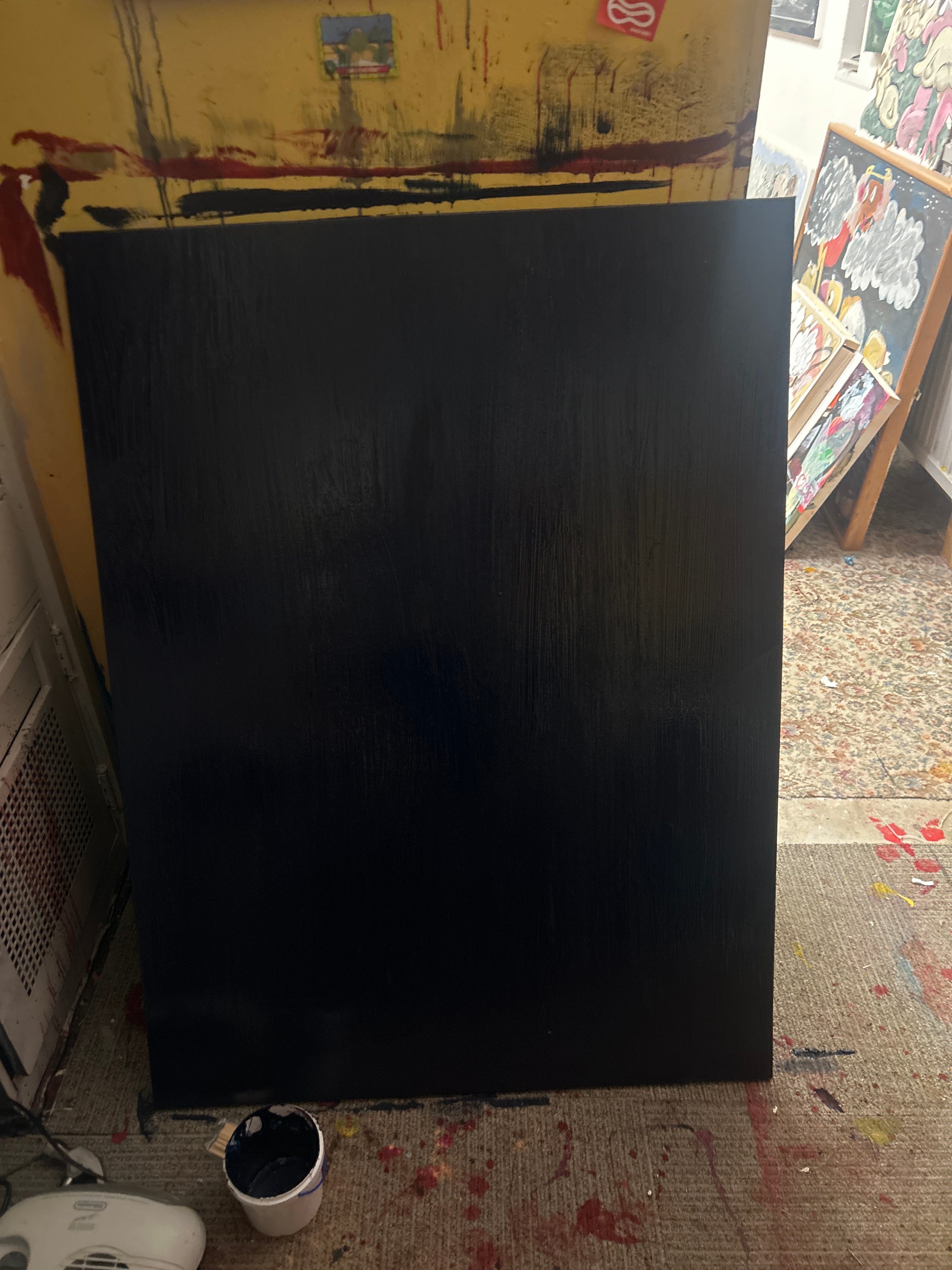
I was painting a mixed, not colour, but shades of blue and grey in the background. I can share that below.
Underneath this painting, you’ve got a few interesting layers, which I find quite fascinating in art. Knowing that there’s different layers underneath it or painting over something.
It’s cool to know, isn’t it?
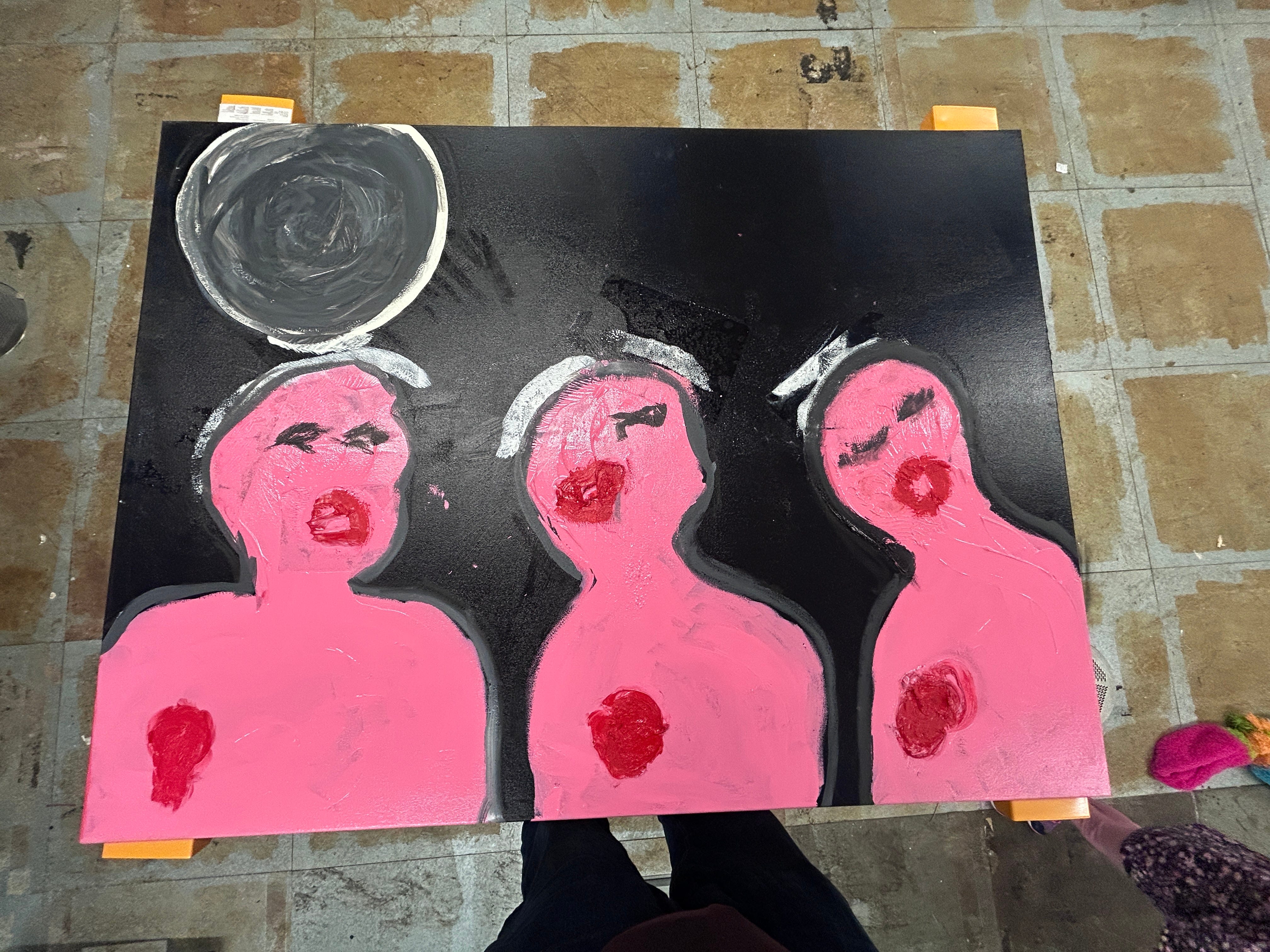
So I’ll share that below. I had this dark, very dark blue background and I painted three figures.
I mixed a load of paint oils with linseed oil. And a bit of pink, a bit of red with a tiny bit of blue.
I painted these three figures, which I showed in a previous Substack, and I’ll show the stages below.
Months of layers below my latest painting:
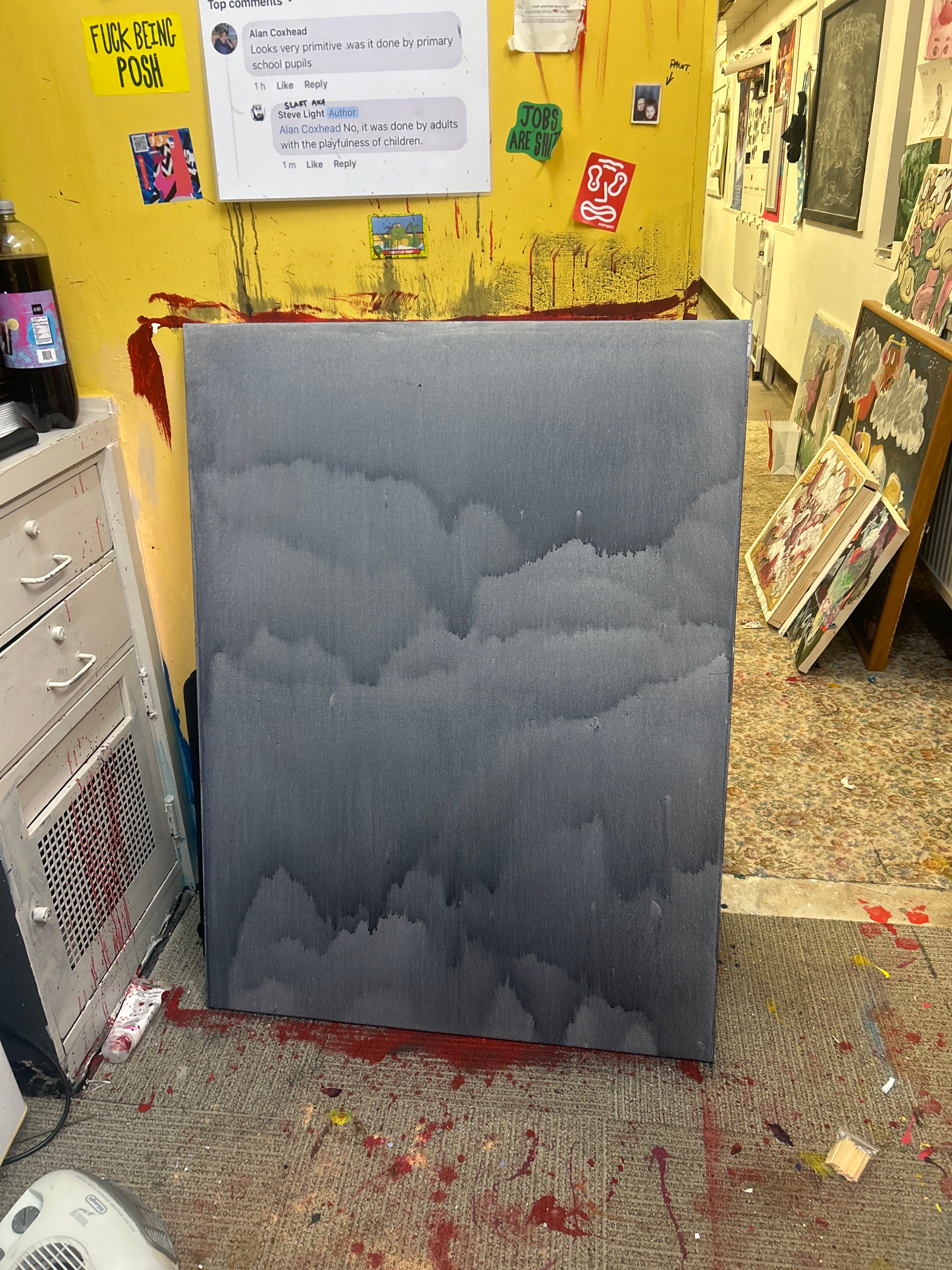
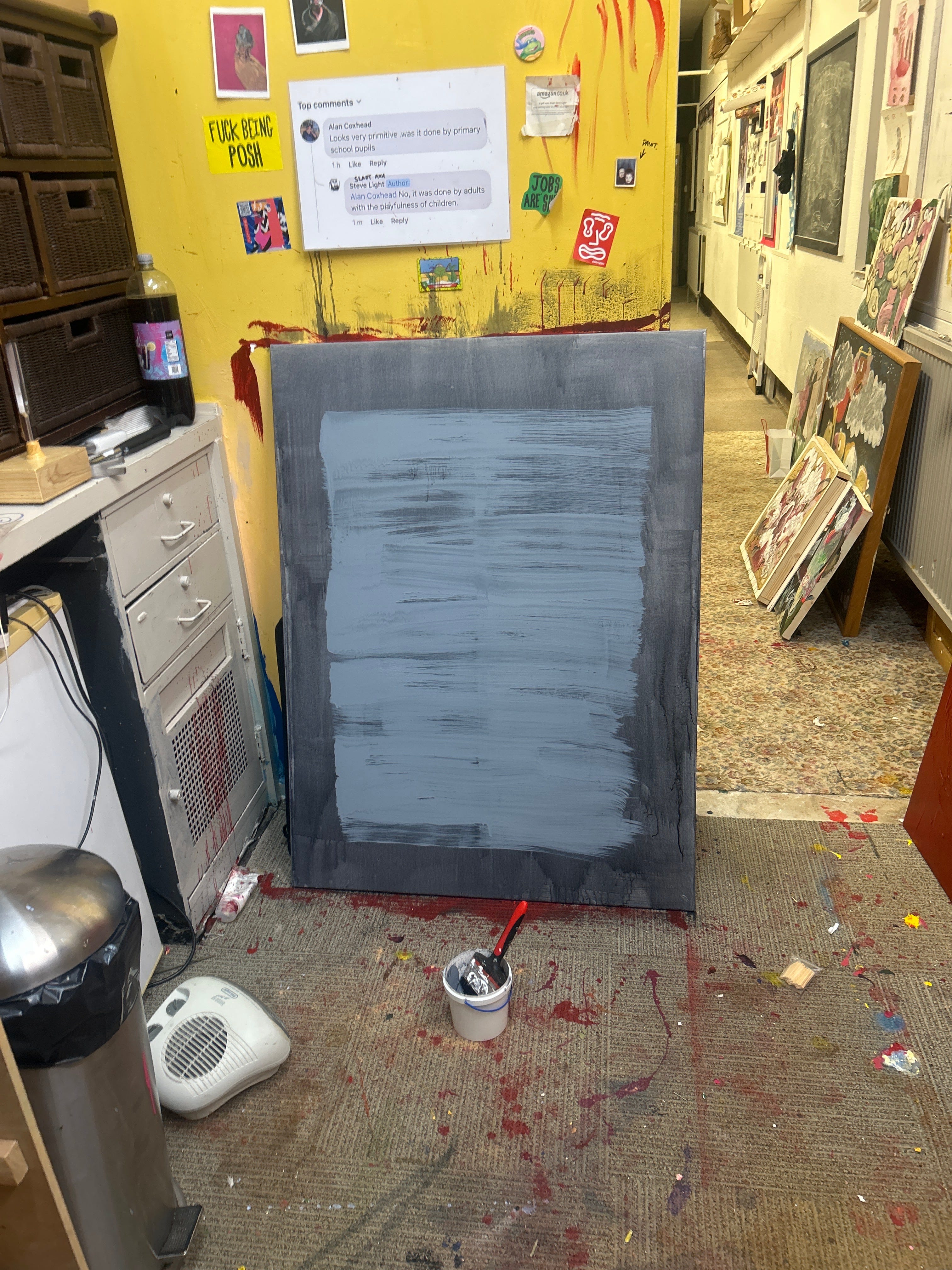
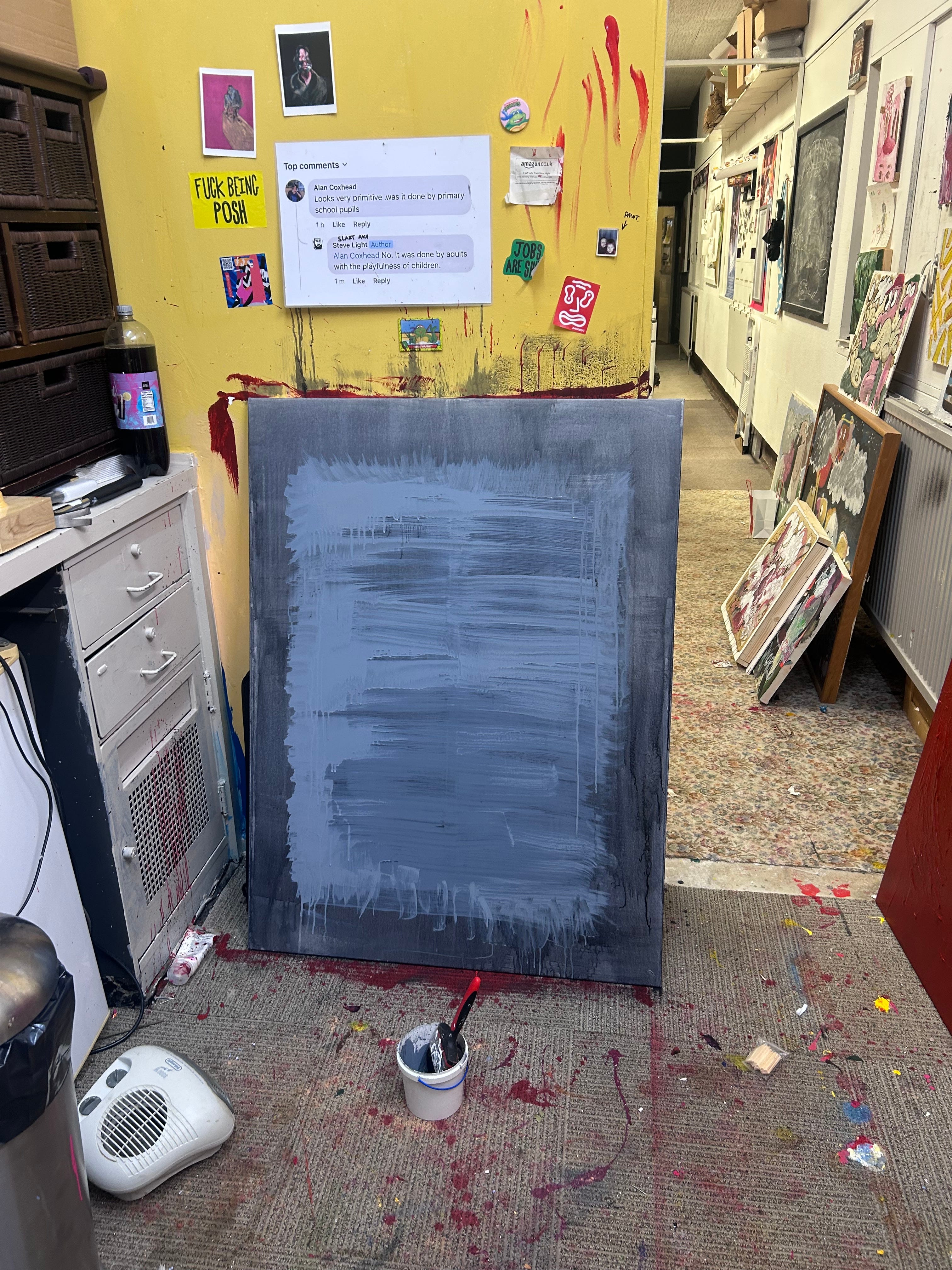
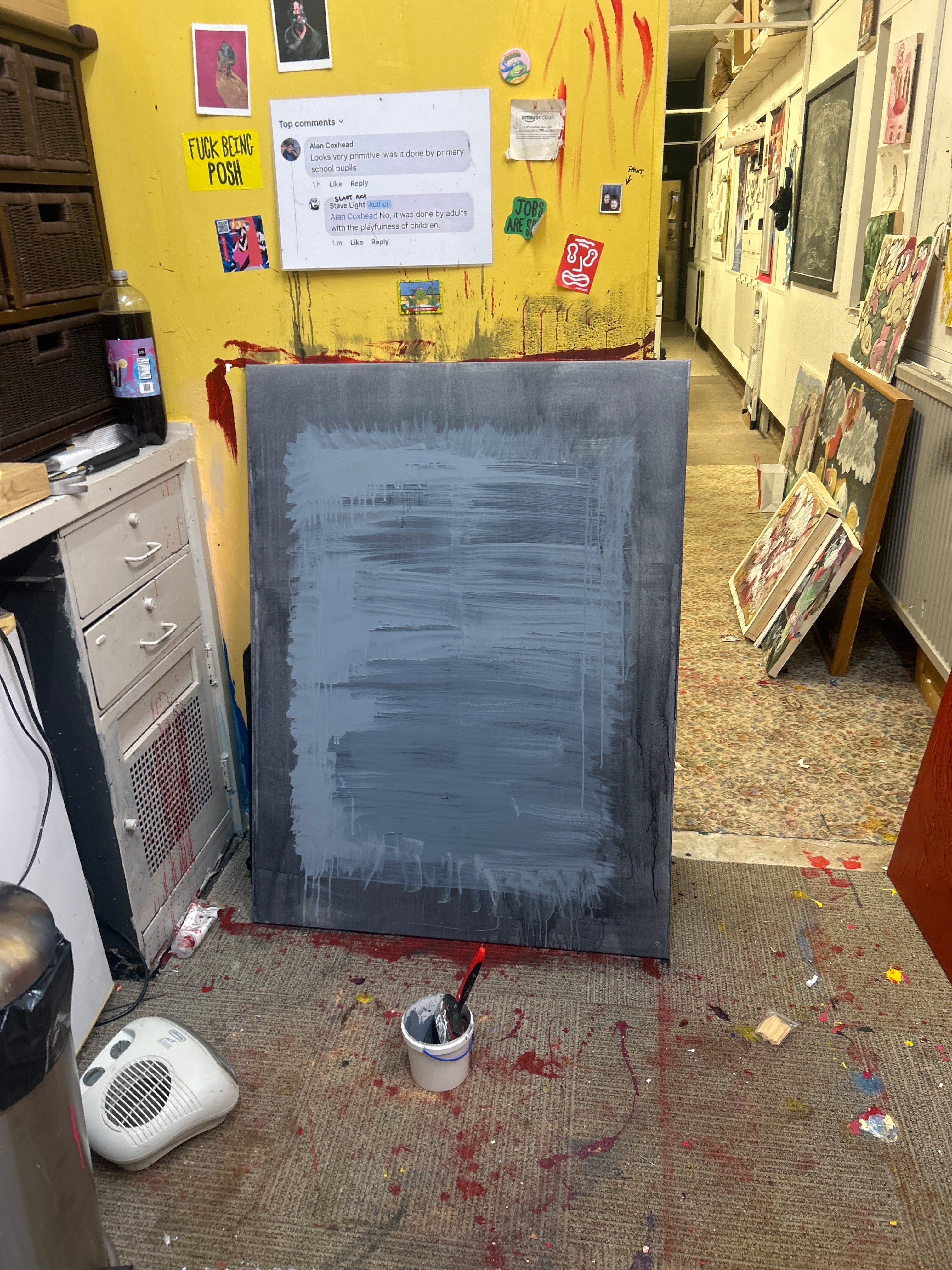
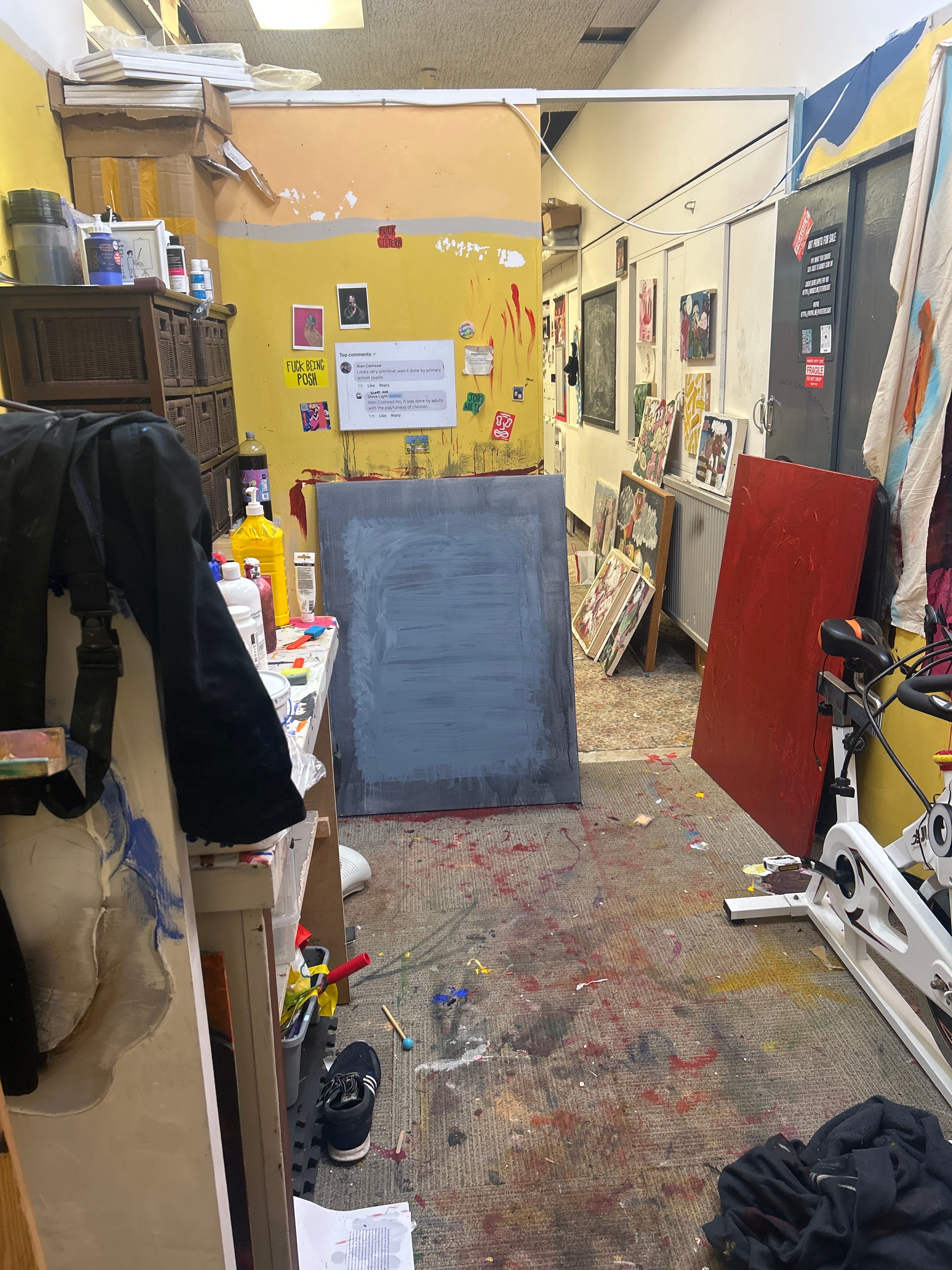
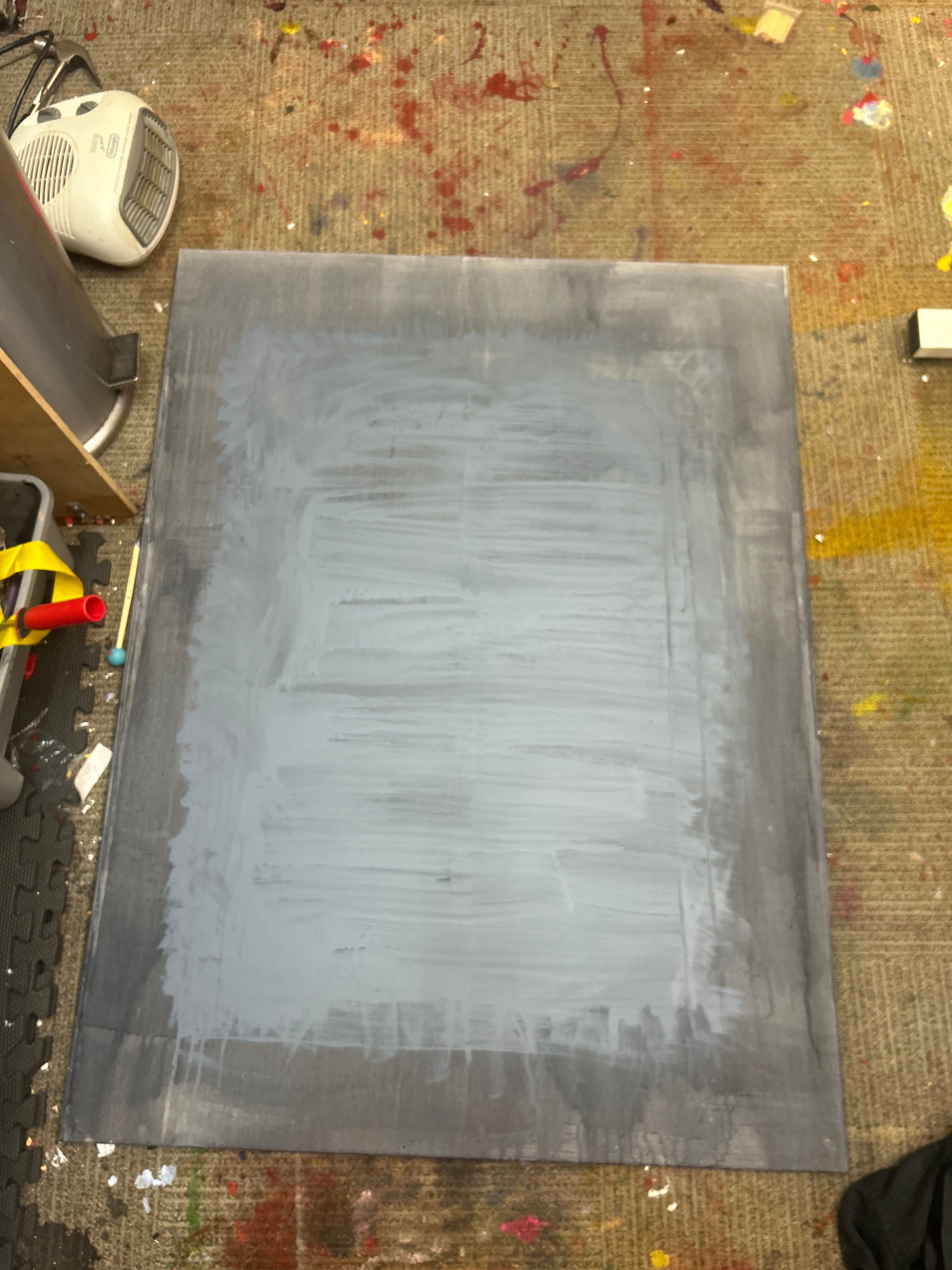
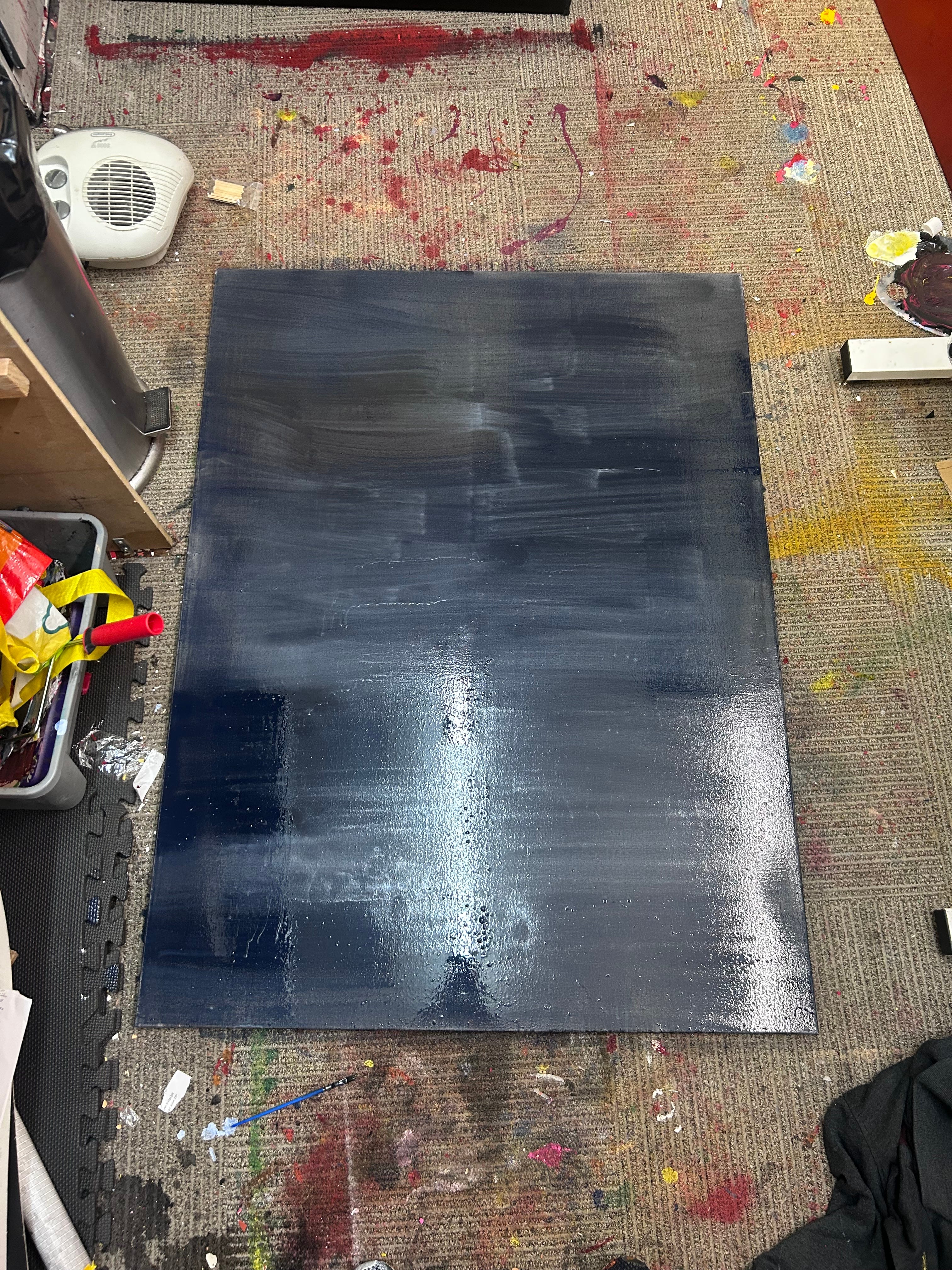
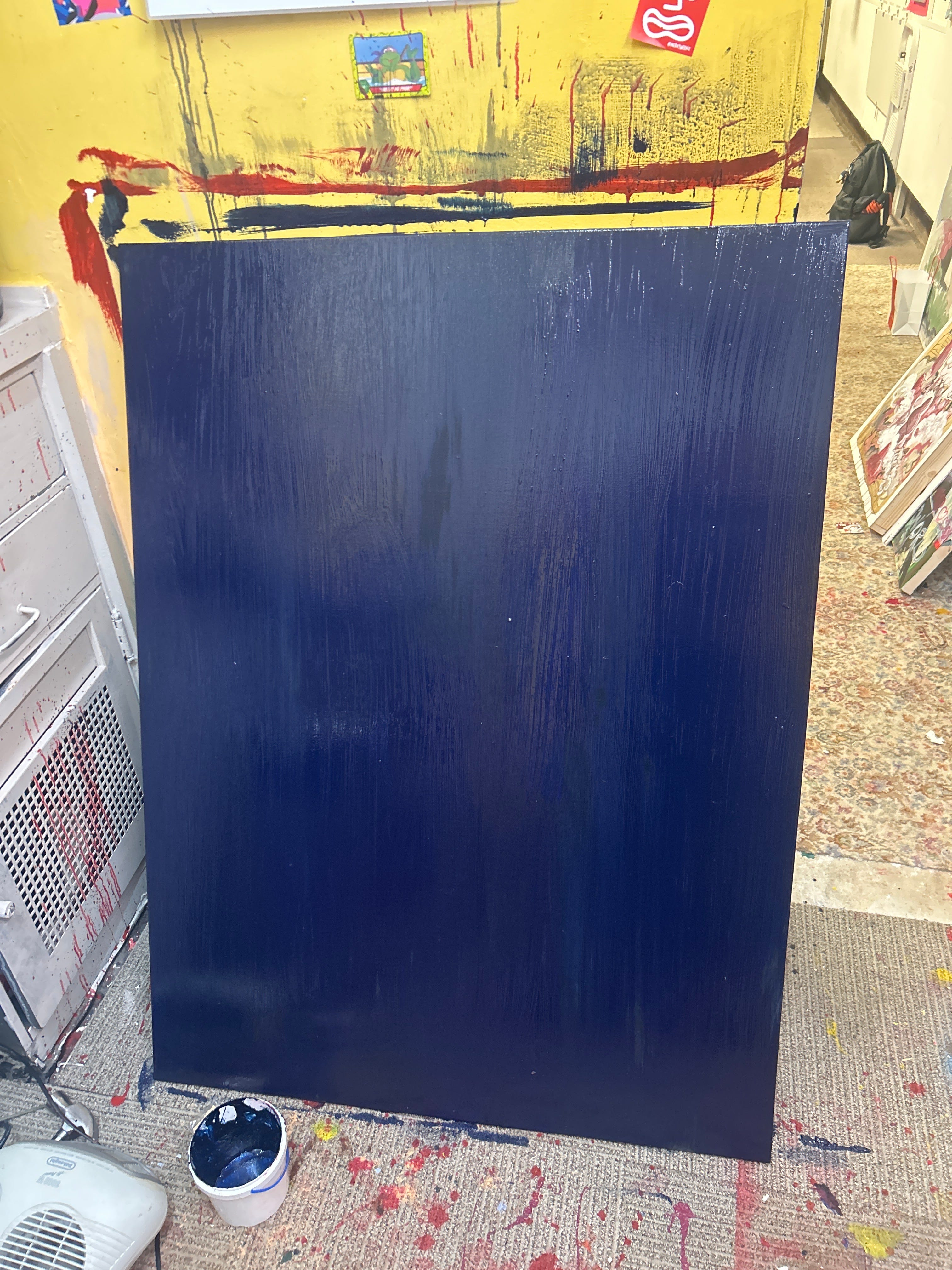
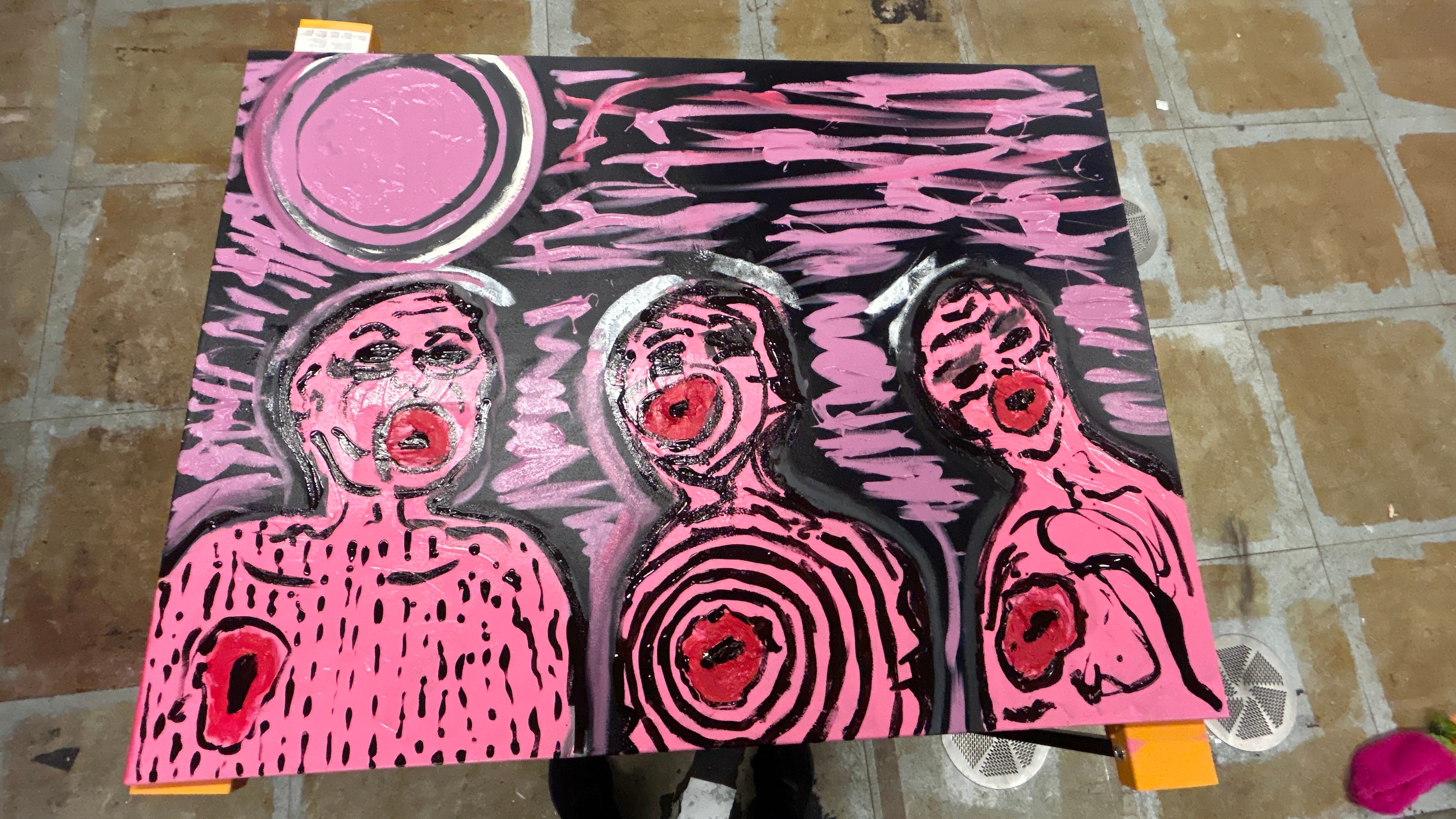
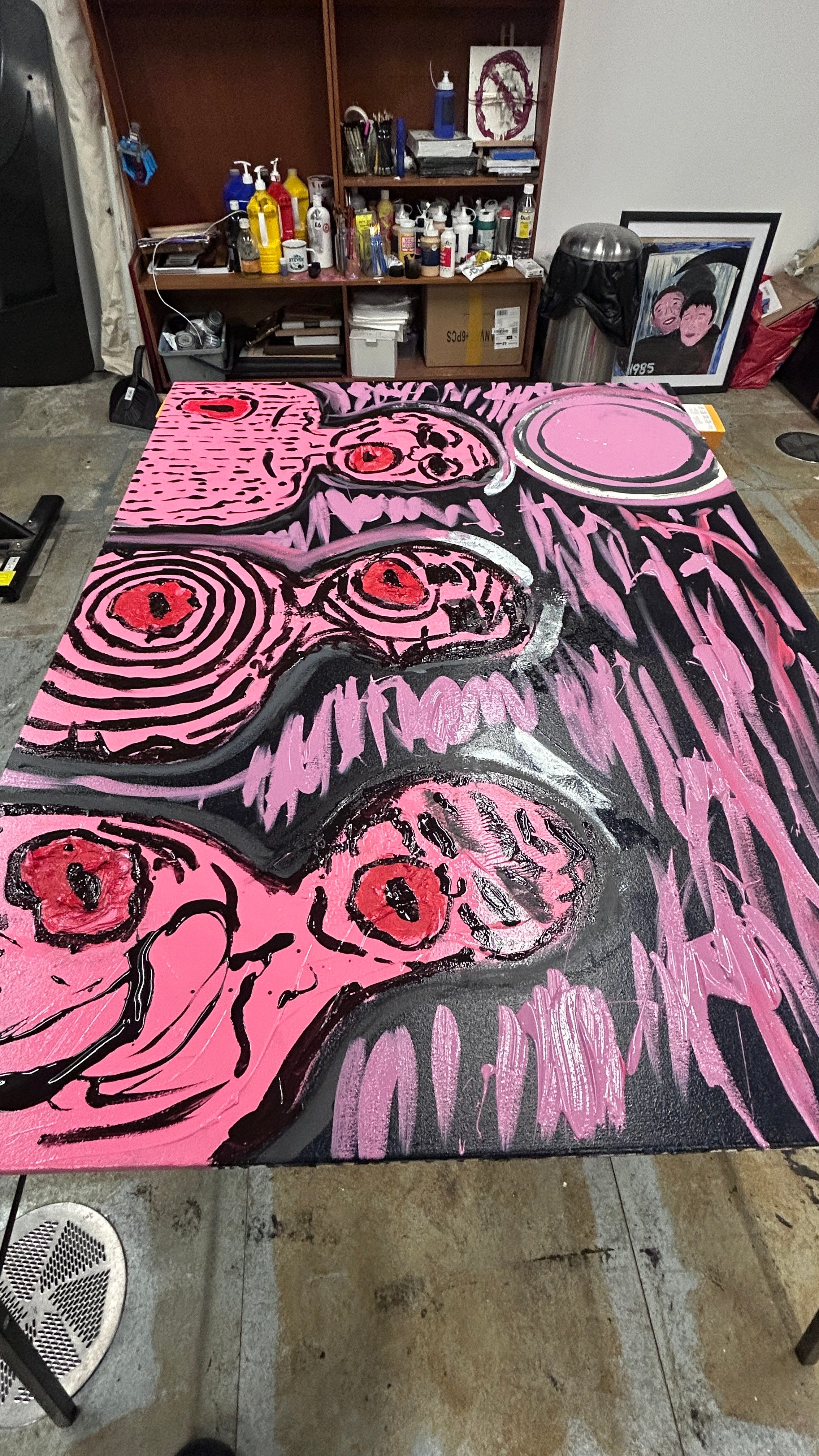
The latest stages:
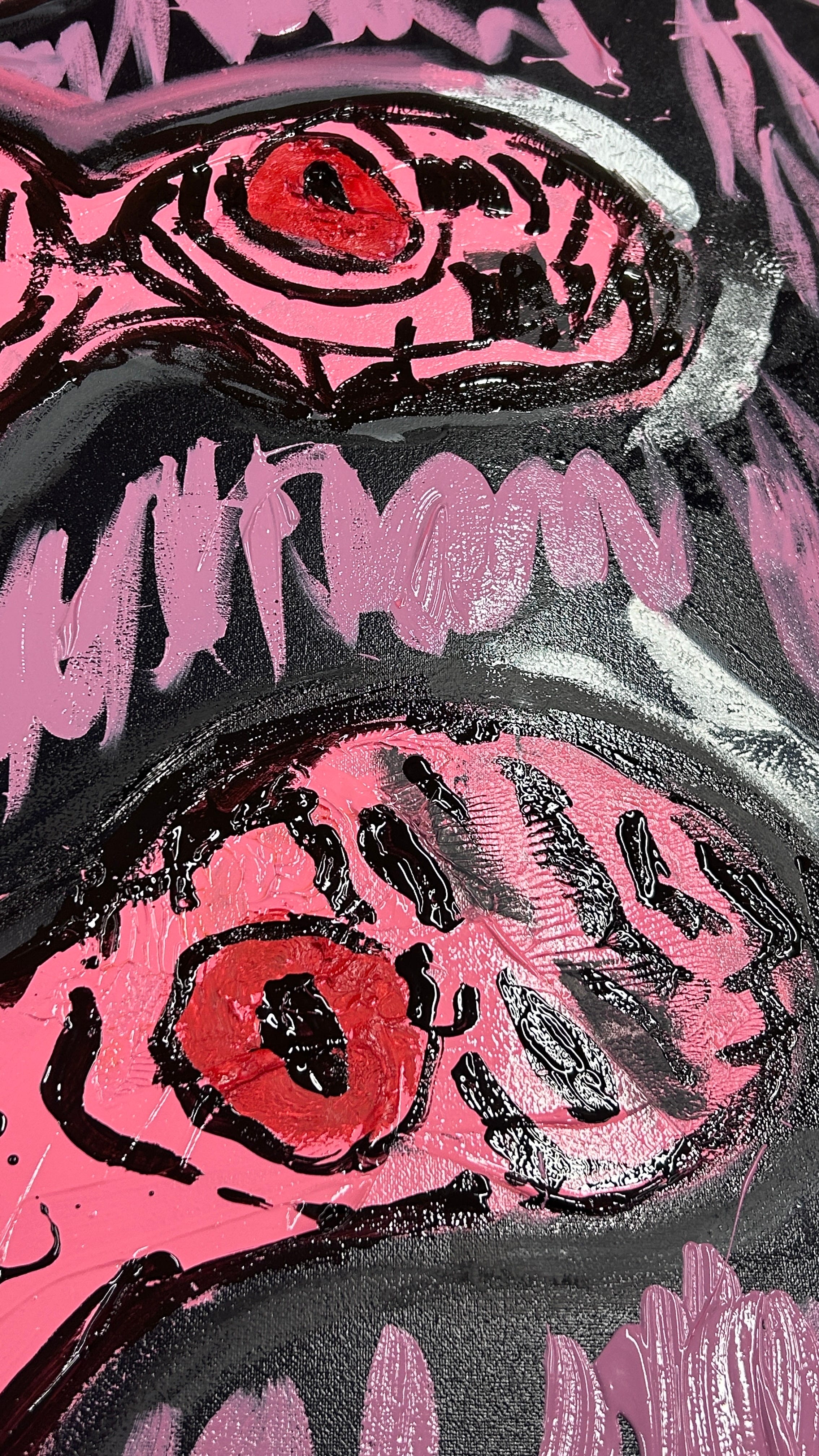
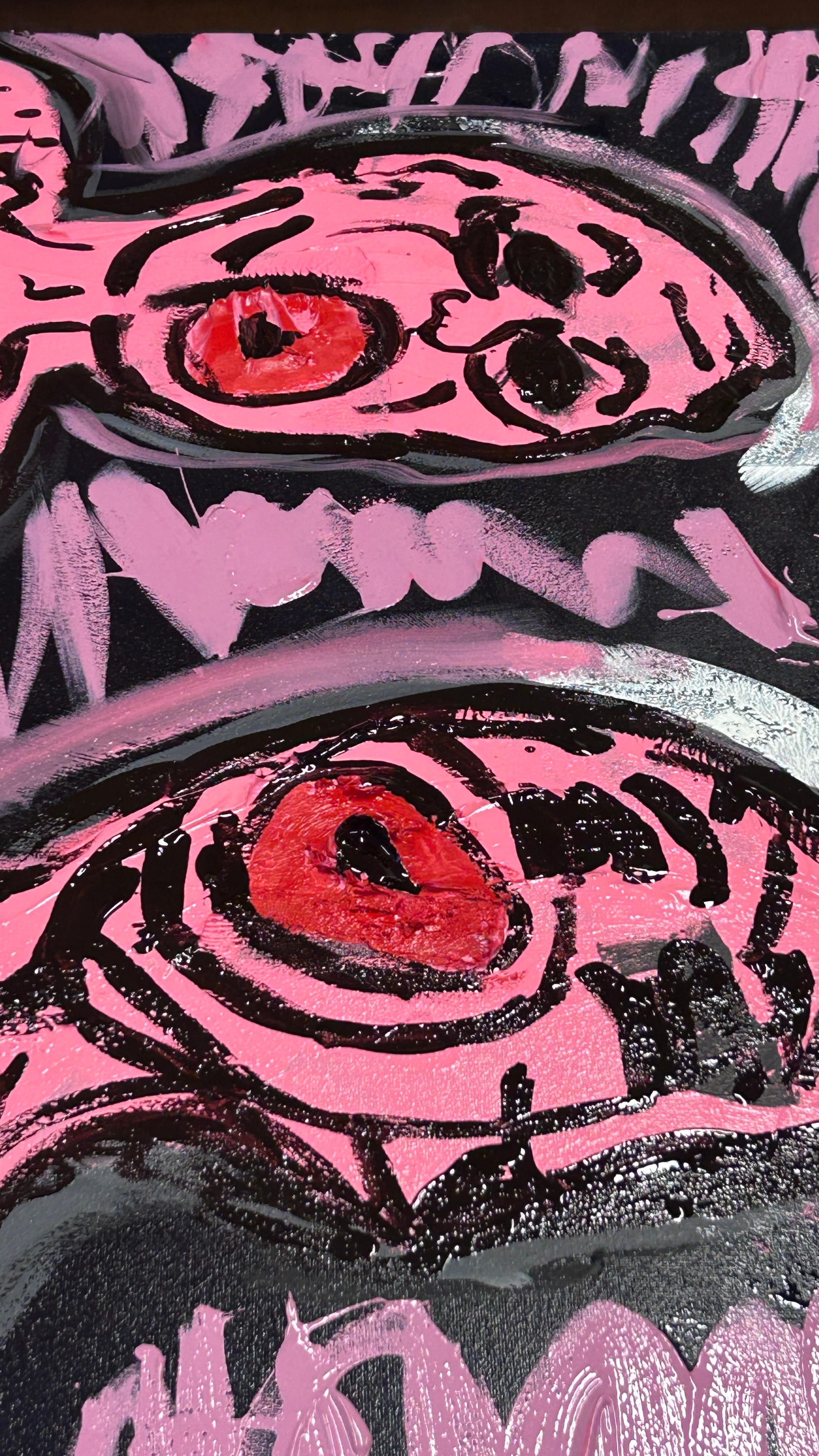
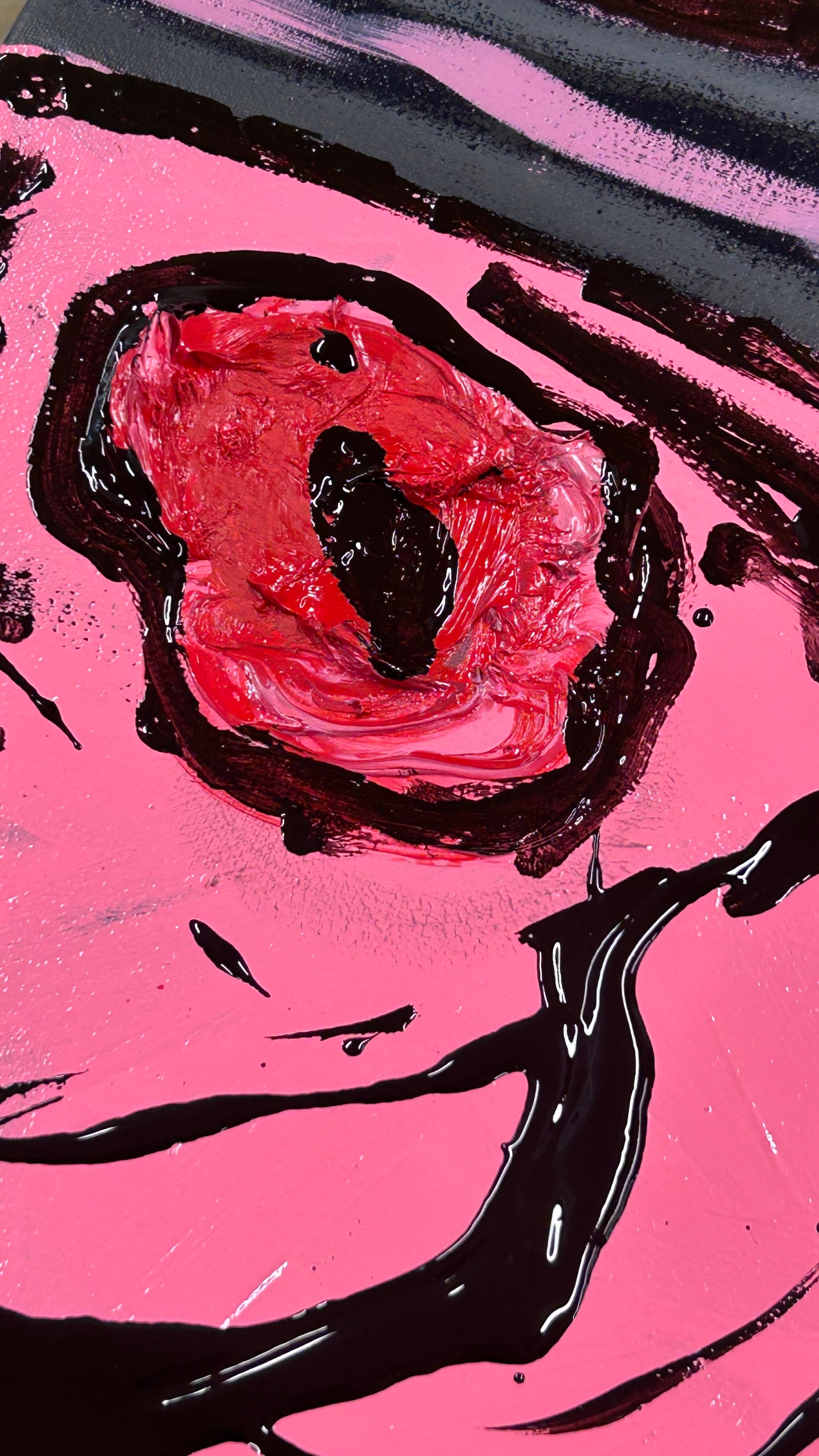
Letting go and painting freely. Well, trying to.
I have no plan and that makes me feel uncomfortable
What I wanted to share was I have no plan and that makes me feel uncomfortable. I’m not one who’s overly planned, as I’ve said a lot of times before.
Overly planning makes me feel uncomfortable. Under planning makes me feel uncomfortable.
I guess I like the Goldilocks of planning, just the right amount of planning.
So what I mean by that is I like to have a theme in my head that I’ve thought about before. And I’ve got a rough starting point, which is usually an image of a person or some kind of starting point.
It usually is an image of a person.
I can draw that figure, paint that figure first of all or after doing the background. So this time I painted these rough figures, abstract figures, and I didn’t know where it was going to go.
That feels really uncomfortable because I don’t know if it’s going to be any good. And that feels uncomfortable as well.
It feels like driving a ship without a rudder. Or driving a car without a steering wheel for lack of a better metaphor.
But it is a bit like that.
I found myself putting layers and layers over these figures. And outlining their eyes and putting some extra layers in the background.
I don’t know what it means or know where it’s going. Maybe some of that fear is around explaining the artwork.
Like most of my work is autobiographical. And it’s based on things that have occurred in my life, kidney disease, loss, grief, bereavement.
It’s not all depressing, I promise. It’s all uplifting, putting a humorous spin on all that childhood memories.
It’s a melting pot of all my experiences and this one isn’t. So it doesn’t fit in a category and I don’t know what’s going to happen.
I don’t like that.
I’m sure a lot of artists, you’d agree, but I’d love to have the freedom of an abstract expressionist. But I guess thinking about that, they’ve got their own framework in their mind.
It’s not totally free, is it? I don’t know.
But anyway, I enjoyed the session nonetheless. It was returning home.
It was doing something that I love so much and it relaxes me absolutely. It’s like no other feeling in terms of getting into the so-called flow state.
Even though it was uncomfortable not knowing where the subject was going, it was also very relaxing and freeing.
Maybe I will freak out and then start putting some structure to it in terms of theme.
But maybe I won’t. I don’t know.
Why would you give away the meaning of the painting anyway?
It reminded me. I was watching a David Shrigley video the other day. And he says he doesn’t really have any description for his work.
He has a rough description overall, but he doesn’t have a detailed synopsis of each painting. And then a lot of people say, why would you give away the meaning of the painting anyway?
Isn’t that for the viewer to decide?
And that is true, of course, isn’t it? You see many paintings and you have your own interpretation of it.
And then you might read the synopsis and it will change your perspective. Or it will match what you’re already thinking.
Does it actually add to it? I’m asking you, does having a description add to it or does it detract from it?
I heard someone else say that you’re not supposed to... I say supposed to, but there’s no rules.
You’re not supposed to read the description of the painting before looking at it. Because that’s going to pre-determine your perception of it.
And the idea I’ve heard a curator say is you look at the painting. And then you can read the synopsis.
But I don’t know. Just talking out loud, thinking out loud.
All I know is I enjoy what I’m doing.
I love painting so much. And I will be getting back into phase two of what does peace of mind feel like in a space.
And following on from my first cube, Memento.
So that’s me for now, over and out,
SLART.
P.S. Before you go Please subscribe to my YouTube Channel for a more audio visual flavour of SLART. I want to get over 1000 subs by end of October.
Re the Goldilocks state of planning artwork. I plan by feel. When it feels off I either toss it, start over or cover over. This is one reason I prefer oil. If it goes through all the repaints/overpaints etc with me still satisfied I’m moving toward what I set out to do then maybe it will turn out similar to what I imagined. I don’t paint as often as I’d like or should but it is highly satisfying when I do